History
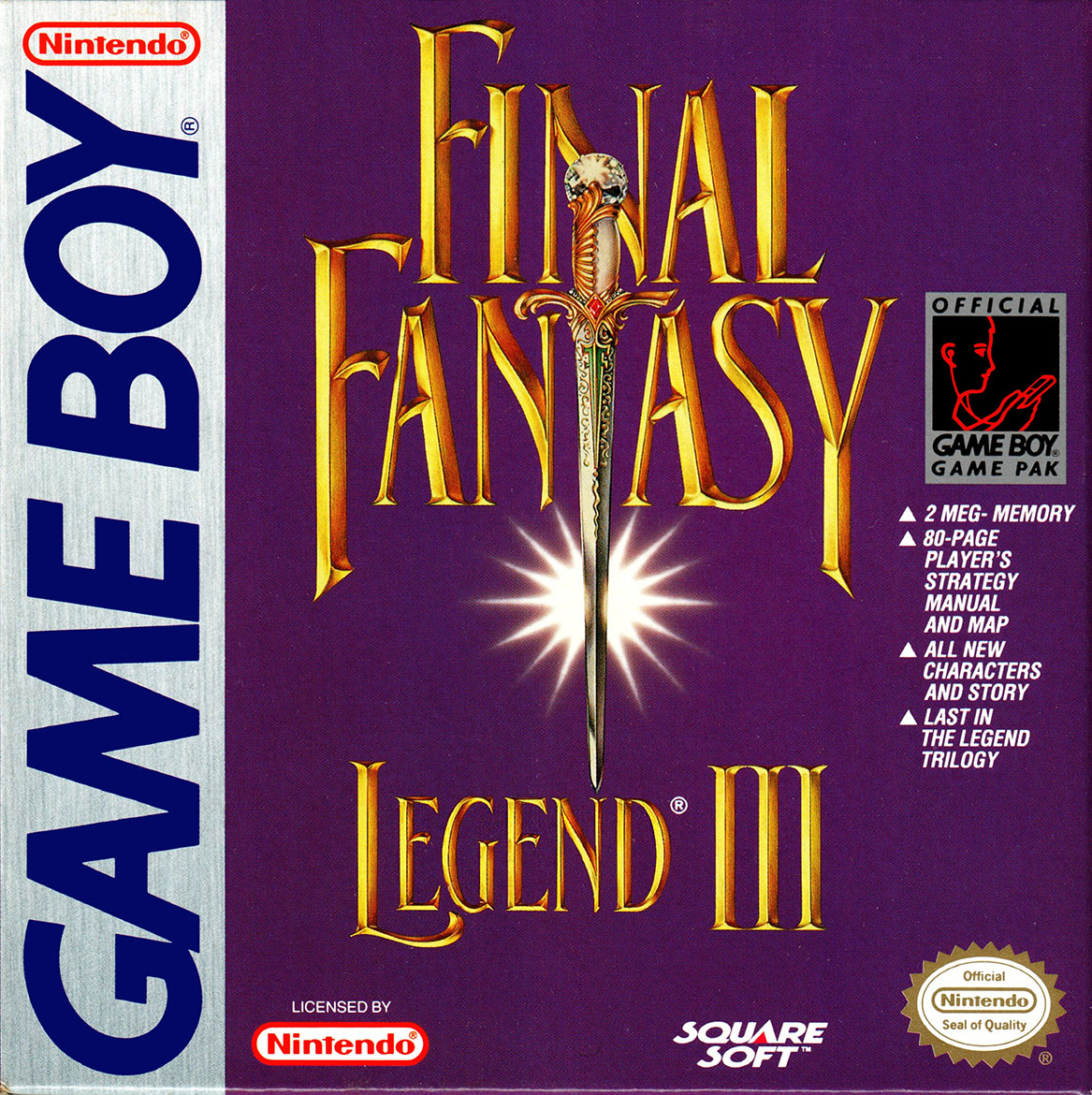 NA box front
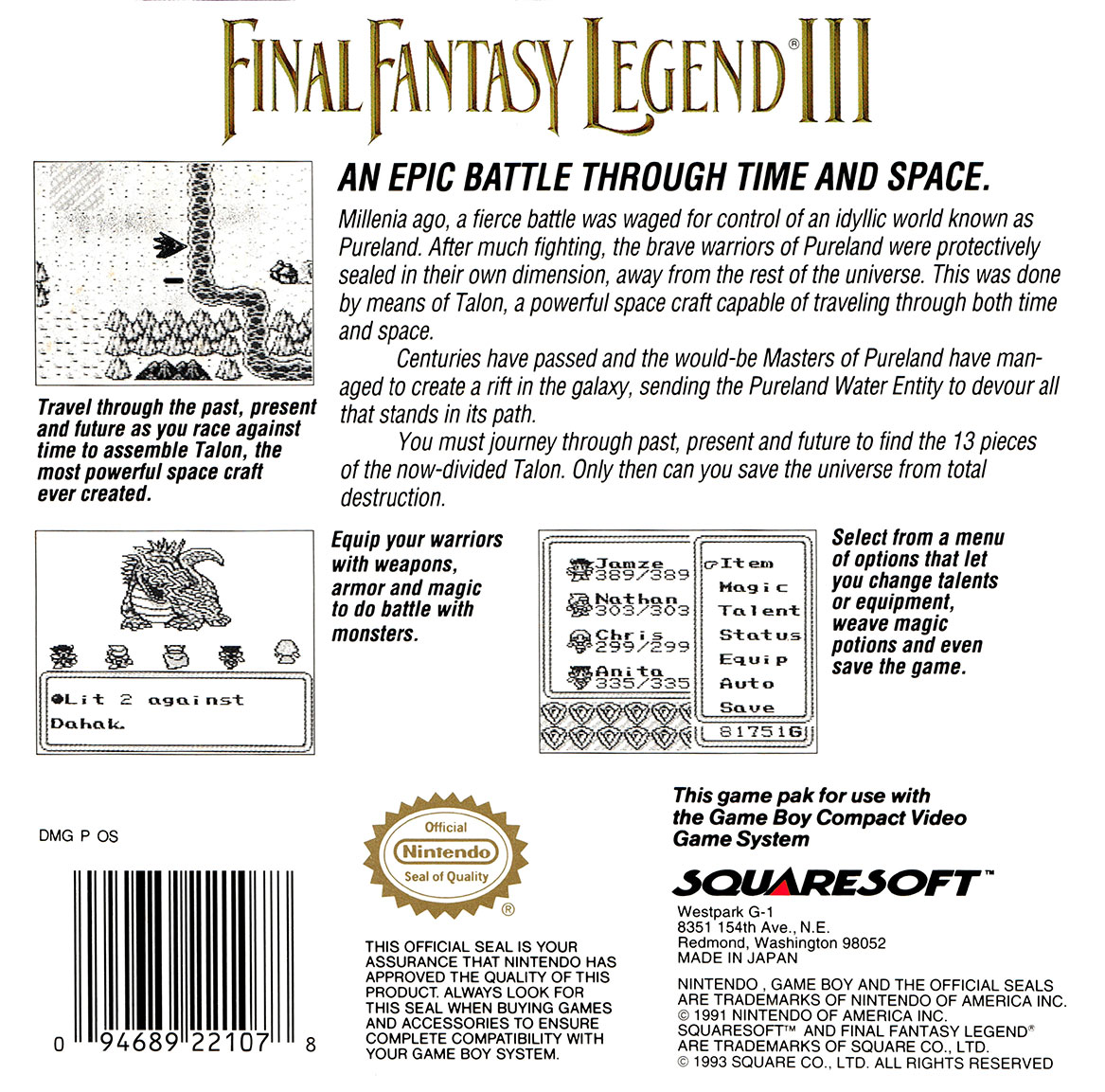 NA box back
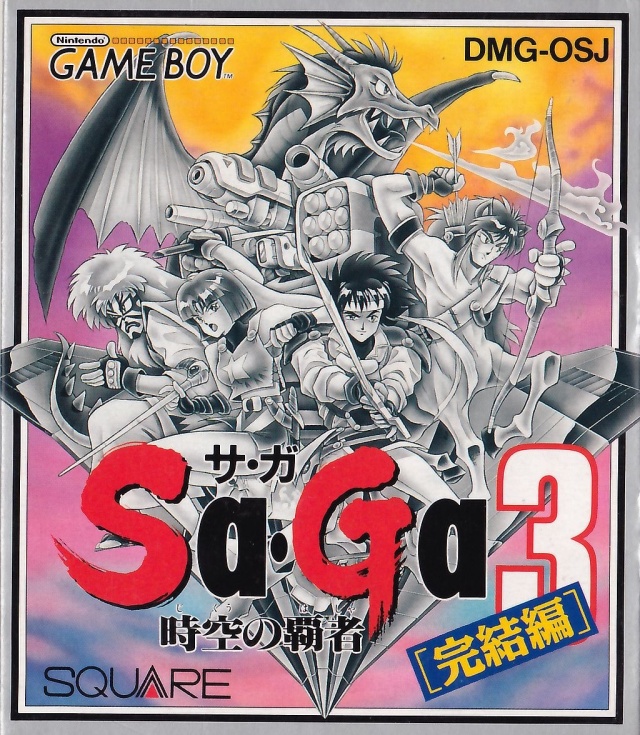 Japan box front
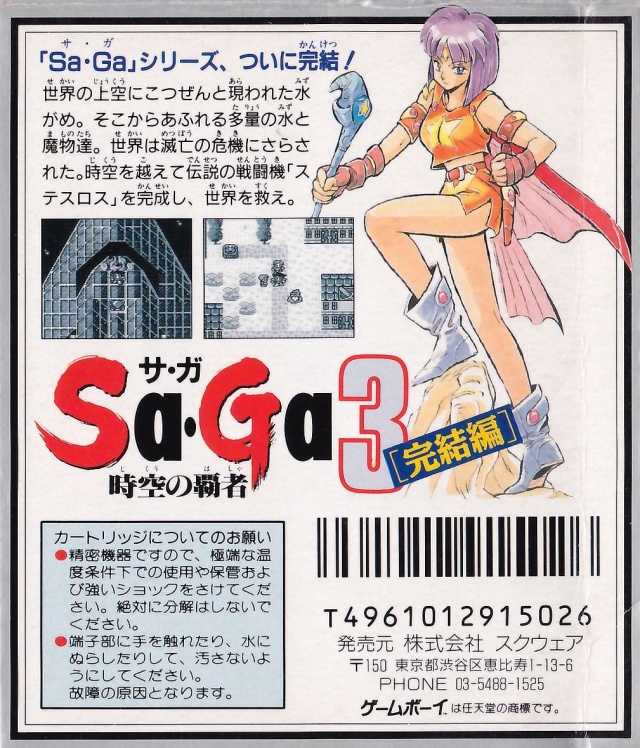 Japan box front
Final Fantasy Legend 3 was released for the Game Boy in 1991 in Japan and 1993 in North America. Like the previous two games, it was published by Square for Nintendo’s handheld system, but this entry was developed by a different team and took the series in a noticeably different direction.
While the first two Final Fantasy Legend games were directed by Akitoshi Kawazu and later became part of the SaGa franchise, Final Fantasy Legend 3 was directed by Kouzi Ide and Chihiro Fujioka, giving the game a style and structure that felt much closer to a traditional Final Fantasy game. The music was composed by Ryuji Sasai and Chihiro Fujioka, featuring a more melodic and adventurous soundtrack that matched the game’s larger scope and emotional story moments.
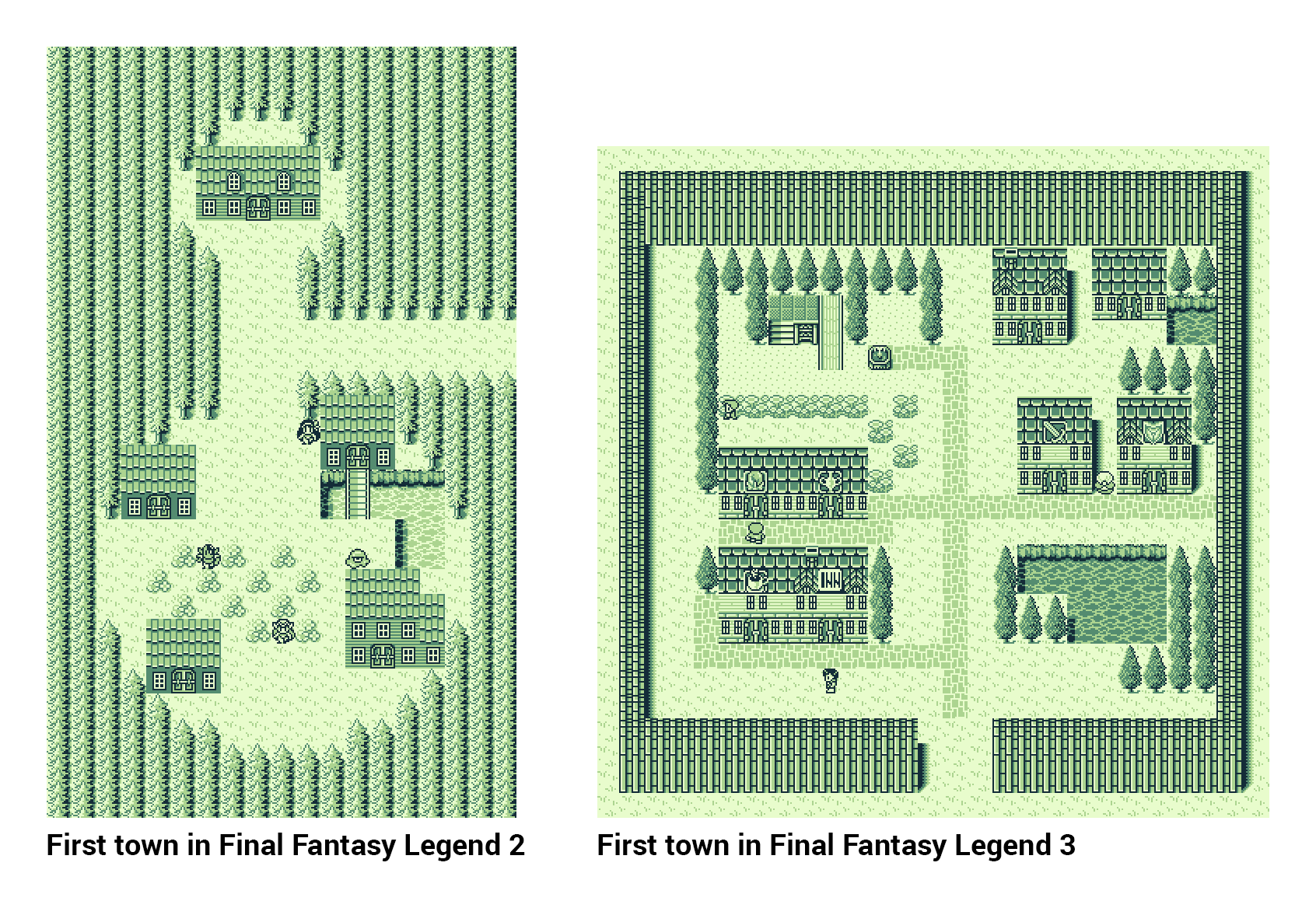 First town comparison - FFL2 and FFL3
By the early 1990s, developers had become more comfortable pushing the Game Boy hardware beyond what many thought was possible. Final Fantasy Legend 3 featured larger towns, more detailed environments, improved character sprites, and cinematic story sequences that helped the game feel more ambitious than its predecessors. The developers also experimented with time travel mechanics, giving players the ability to visit different eras of the world and see how locations changed throughout history.
The story follows a group of young heroes attempting to stop a worldwide flood caused by a mysterious force known as Pureland. Using a time-traveling airship called the Talon, the party journeys between the past, present, and future in search of powerful artifacts and allies. Compared to earlier Game Boy RPGs, Final Fantasy Legend 3 placed a much heavier emphasis on storytelling, character relationships, and emotional scenes. The game’s tone often feels closer to a 16-bit console RPG than a typical portable adventure from the era.
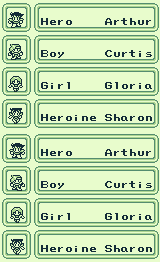 The playable characters
The gameplay also introduced several major changes. Unlike the previous two games, players no longer selected different races at the start of the adventure. Instead, the party members were fixed characters with defined personalities and abilities. The mutation system returned in a simplified form, allowing characters to transform into stronger monster or cyborg forms using special items. Combat became more traditional and easier to understand, making the game more accessible to players unfamiliar with the complicated mechanics of earlier SaGa titles.
 [1] Traveling underweater
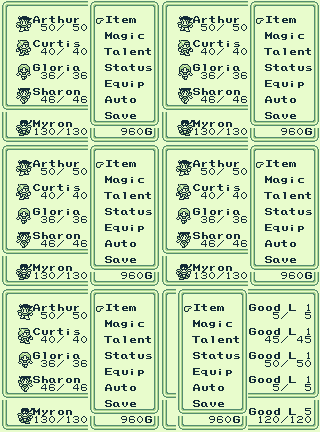 [2] Pressing left moves the panel so you can see MP
Another major improvement was the inclusion of vehicles and overworld exploration features that gave the game a grander sense of scale. Players could travel underwater[1] and pilot a time-traveling spacecraft, Talon! The game also featured a cleaner interface and better menu organization[2], helping reduce some of the frustration found in previous entries.
It can be a little confusing following the correct naming of every game in the SaGa series. For example, did you know SaGa Frontier is SaGa 7 in Japan? Here's what's what in the series to make things clearer:
- Final Fantasy Legend (Game Boy) - SaGa 1
- Final Fantasy Legend 2 (Game Boy) - SaGa 2
- Final Fantasy Legend 3 (Game Boy) - SaGa 3
- Romancing SaGa (SNES) - SaGa 4
- Romancing SaGa 2 (SNES) - SaGa 5
- Romancing SaGa 3 (SNES) - SaGa 6
- SaGa Frontier (Playstation) - SaGa 7
- SaGa Frontier 2 (Playstation) - SaGa 8
- Unlimited SaGa - SaGa 9
Final Fantasy Legend 3 Re-release
In July 1998, Sunsoft acquired the license for Final Fantasy Legend 3 and re-released it on the Game Boy in North America. Nothing was changed or added to the game, aside from Sunsoft's logo on the box. It was simply a re-distribution done on behalf of Squaresoft.
SaGa 3 for Nintendo DS
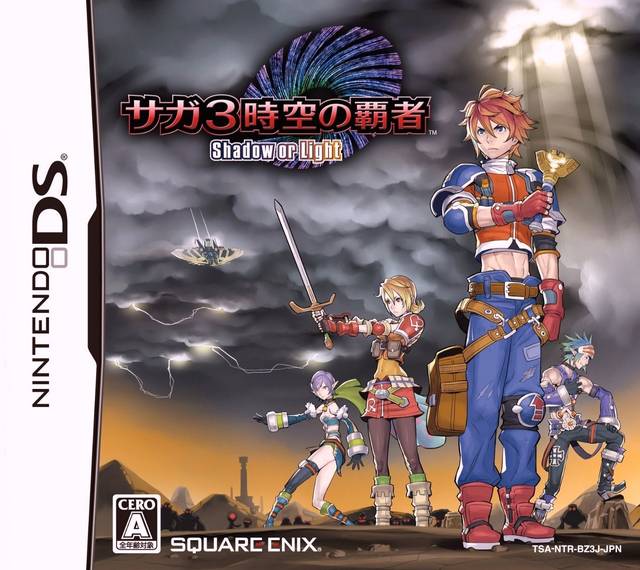 Japan box front
Square Enix went on to fully remake all three Final Fantasy Legend games (SaGa 1-3). The SaGa 2 3D remake, SaGa 2 Hihō Densetsu: Goddess of Destiny, was released for the Nintendo DS in Japan in January 2009. And then in September 2010, Square Enix released the 3D remake of SaGa 3: SaGa 3 Jikū no Hasha: Shadow or Light. Just like with the SaGa 2 3D remake, it completely reimagines the Game Boy classic with modern features and full 3D visuals.
The graphics use a beautiful cel-shaded art style that gives the world a colorful, storybook look. Battles are no longer random encounters. Like in SaGa 4 through 8, you can see enemies wandering around, and touching them begins a fight. The Nintendo DS’s dual screens make everything feel more organized and accessible. The top screen often displays a map of your surroundings, while the bottom screen shows menus, battle information, and a visual layout of your party’s position.
New content was also added, including side events and a multiplayer boss arena where players can team up to fight powerful bosses and earn rare items. It’s a fun addition that gives the game extra replay value.
In January 2011, fans released a complete English translation patch, making this game fully playable in English for the first time. It remains one of the best ways to experience this beloved Game Boy classic in a fresh and modern form. I have SaGa 3 screenshots from this English project. You can download the translation patch from Downloads.
Storyline
An epic journey through time and space! Millennia ago, a fierce war was fought over control of a peaceful world known as Pureland. In order to end the conflict, its most powerful warriors were sealed away in a separate dimension, far removed from the rest of the universe. This was achieved through Talon, a legendary spacecraft capable of traveling through both time and space, preserving the fragile balance between worlds.
 The Pureland Water Entity
Centuries have passed, and that sealed history is beginning to unravel. A rift has opened in the galaxy, and the Pureland Water Entity has been unleashed, devouring everything in its path as it spreads chaos across time itself. The stability of reality is now collapsing.
To stop this threat, you must embark on a journey across the past, present, and future in search of the 13 scattered fragments of Talon. Only by reassembling the broken craft can you hope to mend the rift, confront the ancient power behind it, and save the universe from total destruction.
The beginning of the game
Battle System
Things work a little differently in Final Fantasy Legend 3 compared to its Final Fantasy Legend predecessors. Instead of simply displaying the number of enemies in a group, battles now visually show each monster on screen, allowing you to target specific enemies individually. This also changes how magic works: spells that target an entire enemy group become less powerful the more monsters are caught in the attack.
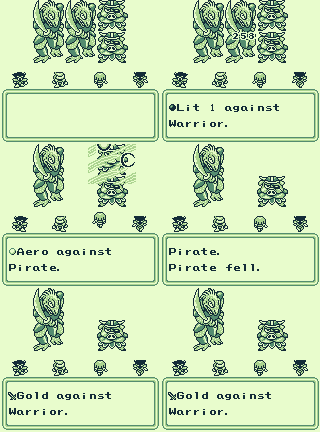 A typical random battle
Just like with Final Fantasy Legend 2, fallen party members automatically revive with 1 HP after battle, reducing the frustration of constant trips to heal. Characters can also consume monster meat to transform into monsters or install robot parts to become robots, expanding on the transformation mechanics from the previous games. Unlike Final Fantasy Legend 1 and 2, these abilities are no longer limited to monster and robot characters alone.
Weapons have also been improved and now feature unlimited uses, eliminating one of the more restrictive mechanics from the earlier titles. Outside of these changes, the rest of the combat system remains familiar RPG territory, making the game easy to pick up for fans of the genre.
Tips & Strategy
At the start of a new game: It's a good idea to spend some extra time training in the simulation machine. Before leaving town, make sure to purchase the best weapons, armor, and spells currently available. Building up your party early on will make the adventure much smoother.
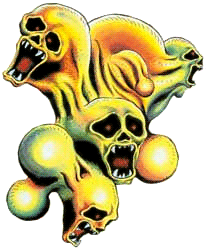 Avoid monster meat & robot parts: One important strategy is to avoid eating monster meat or installing robot parts after battle. While these transformations may sound interesting, turning your characters into monsters or robots usually weakens them and replaces their useful magic spells with less effective monster or robot abilities.
Always keep equipment upgraded: Keeping your equipment upgraded at all times is one of the best ways to prepare for the game's powerful bosses, many of which have enormous amounts of HP. Because of this, you'll likely spend plenty of time grinding with random battles and collecting enough GP to afford the latest gear.
The strongest magic: The most useful spell in the game is Stone, which instantly kills most enemies while still rewarding you with experience points. Exit and Exit 2 can also instantly remove enemies from battle, but they do not award any experience. If you're looking for pure attack power, the strongest spell in the game is Flare, which can be created by combining two Fire Stones.
My Opinion
Final Fantasy Legend 3 is definitely a different experience compared to its Final Fantasy Legend predecessors. The story is far more detailed and character-driven, featuring a larger amount of dialogue and a stronger focus on supporting characters throughout the adventure. The game places a much heavier emphasis on storytelling than the earlier titles in the series.
 Combat moves at a slower pace than before, but the added visual detail makes battles more exciting to watch. Enemies are displayed directly on screen, attacks feature improved animations, and the overall presentation feels more advanced for a Game Boy RPG.
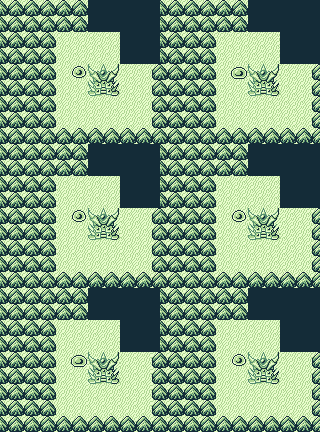
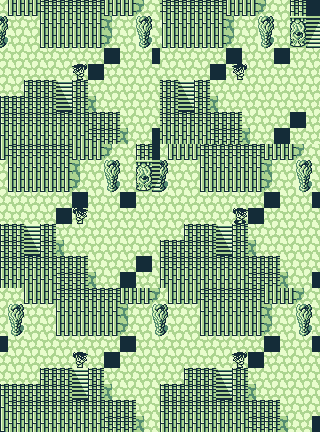 Jumping over a hole
One of the game's most interesting additions is the ability to jump. This mechanic adds an extra layer of depth to dungeon exploration, requiring you to leap across gaps, drop through holes, and carefully navigate their surroundings in order to uncover treasures and progress further into dangerous areas.
The worlds themselves also feel more alive and interactive than in previous games, helping make the adventure feel larger in scale. While Final Fantasy Legend 3 is enjoyable and memorable during a first playthrough, and perhaps even a second, it doesn't quite have the same long-term replay value as some of the other entries in the series.