About Final Fantasy Legend 2(SaGa 2)
History
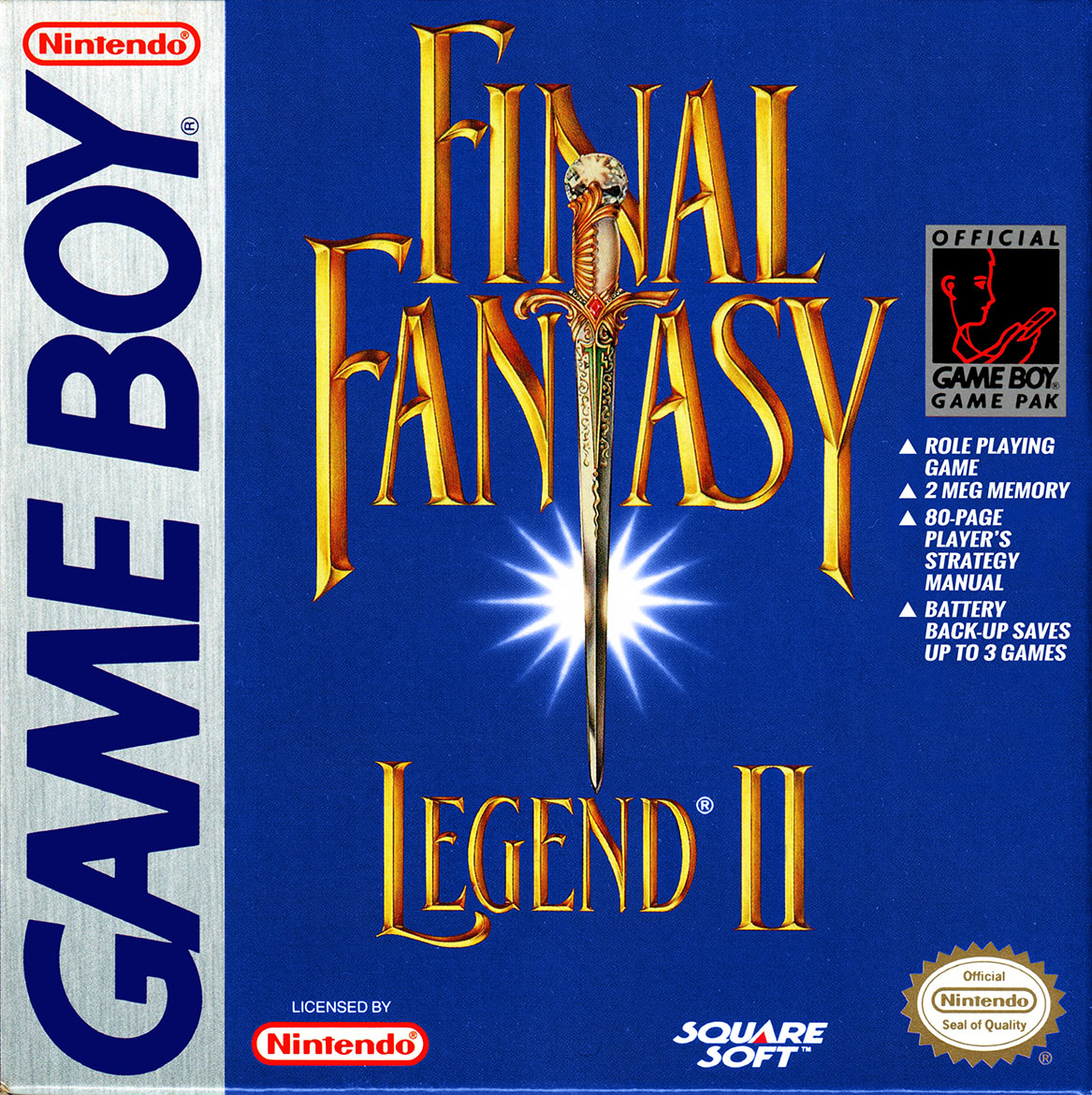 NA box art
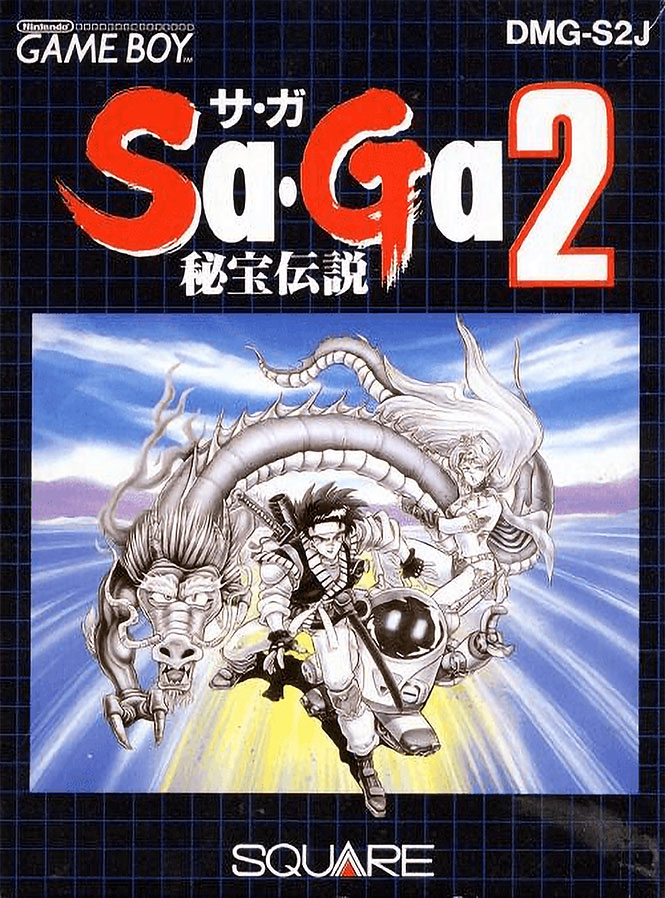 Japan box art
Final Fantasy Legend 2 was released for the Game Boy in 1990, two years after the original Final Fantasy Legend. Like the first game, it was developed by Square and directed by Akitoshi Kawazu, who would go on to make the SaGa series one of Square’s longest-running franchises. The music was composed by Kenji Ito, whose catchy and emotional themes became one of the highlights of the game, and the pixel art and character designs were handled by Kazuko Shibuya, who helped define the look of early Final Fantasy titles.
During this time, Square wanted to bring the depth of its console RPGs to the portable market. However, the Game Boy's limited hardware made that a challenge. The team behind Final Fantasy Legend 2 focused on pushing the system as far as it could go. They improved the graphics with more detailed environments and enemy sprites. They added more story-driven events. They introduced unique worlds that each had their own personality and tone.
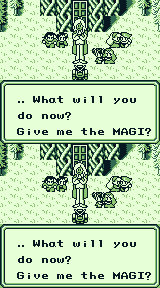 A dramatic scene with custom sprites
The story was a major step up from the first game. Instead of a simple quest through a mysterious tower, Final Fantasy Legend 2 revolves around a young hero searching for his missing father while uncovering the secret of the powerful MAGI fragments. The game features a wide cast of allies and villains, along with more dialogue and emotional scenes than most RPGs on the Game Boy at the time.
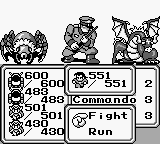 A temporary character in your party
The gameplay also saw big improvements. The battle system was reorganized to make it easier to manage party members, weapons, and skills. The variety of races returned, but this time they felt more balanced and distinct. A new “Memo” feature allowed players to review key story information, which was especially useful in a time when saving notes outside of the game was common.
In July 1998, Sunsoft acquired the license for Final Fantasy Legend 2 and re-released it on the Game Boy in North America. Nothing was changed or added to the game, aside from Sunsoft's logo on the box. It was simply a re-distribution done on behalf of Squaresoft.
It can be a little confusing following the correct naming of every game in the SaGa series. For example, did you know SaGa Frontier is SaGa 7 in Japan? Here's what's what in the series to make things clearer:
- Final Fantasy Legend (Game Boy) - SaGa 1
- Final Fantasy Legend 2 (Game Boy) - SaGa 2
- Final Fantasy Legend 3 (Game Boy) - SaGa 3
- Romancing SaGa (SNES) - SaGa 4
- Romancing SaGa 2 (SNES) - SaGa 5
- Romancing SaGa 3 (SNES) - SaGa 6
- SaGa Frontier (Playstation) - SaGa 7
- SaGa Frontier 2 (Playstation) - SaGa 8
- Unlimited SaGa - SaGa 9
SaGa 2 for Nintendo DS
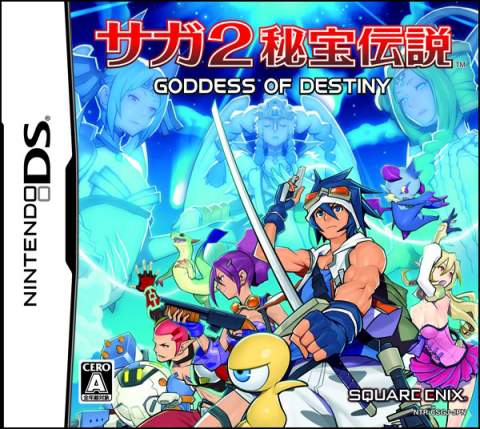 Japan box art
The remake of SaGa 1 for the WonderSwan Color was just the beginning. Square Enix went on to fully remake all three Final Fantasy Legend games (SaGa 1-3), starting with “SaGa 2 Hihō Densetsu: Goddess of Destiny” for the Nintendo DS. It was released in Japan in January 2009 and completely reimagines the Game Boy classic with modern features and full 3D visuals.
The graphics use a beautiful cel-shaded art style that gives the world a colorful, storybook look. Battles are no longer random encounters. Like in SaGa 4 through 8, you can see enemies wandering around, and touching them begins a fight. The Nintendo DS’s dual screens make everything feel more organized and accessible. The top screen often displays a map of your surroundings, while the bottom screen shows menus, battle information, and a visual layout of your party’s position.
New content was also added, including side events and a multiplayer boss arena where players can team up to fight powerful bosses and earn rare items. It’s a fun addition that gives the game extra replay value.
In January 2011, fans released a complete English translation patch, making this game fully playable in English for the first time. It remains one of the best ways to experience this beloved Game Boy classic in a fresh and modern form. I have SaGa 2 screenshots from this English project. You can download the translation patch from Downloads.
Storyline
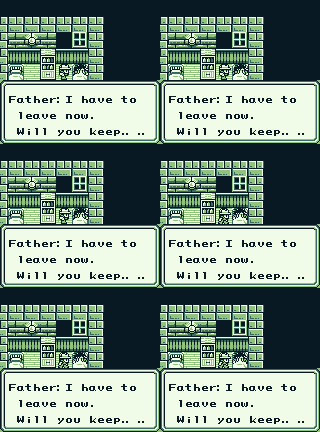 A father entrusts his son with MAGI, then leaves
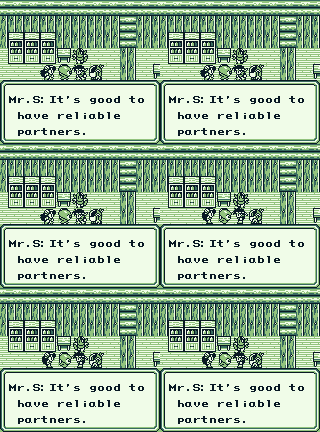 Your friends want to join your adventure!
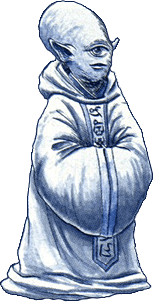
(You can choose your main character, but for this story I’ll refer to him as a male human.)
The game begins with a man escaping through a window in the middle of the night. The noise wakes up his young son, who catches a brief glimpse of his father before he leaves. All his father says is that he’s going away for a while.
Years later, the boy grows up and decides to search for his missing father. He gathers a few of his close friends and sets out into the world. Along the way, he learns that the key to finding his father lies in collecting Magi, mysterious fragments of power scattered across many worlds.
From that moment, the adventure begins. He and his friends travel through caves, temples, enemy fortresses, ancient Japanese castles, and much more. They discover strange and fascinating worlds, including a land of giants, a world where beauty is worshipped and ugliness is exiled, a realm ruled by a shogun, a place where dragon racing is everything, and even a world made up of one massive cave. And that is only the beginning.

Battle System
Final Fantasy Legend 2 uses a traditional turn-based battle system where your party faces off against groups of enemies. Battles are fast and straightforward.
When a party member is defeated, they're only knocked out for the rest of that battle. Once the fight ends, all downed members are automatically revived with 1 HP. However, if your entire party is defeated, Odin will appear and give you another chance to continue.
Enemies tend to target the first character in your battle party more often than others. It's smart to equip them with the best armor available. Weapons, shields, and even most items have limited uses, so you'll need to manage your equipment carefully. Once their uses run out, they break and disappear from your inventory.
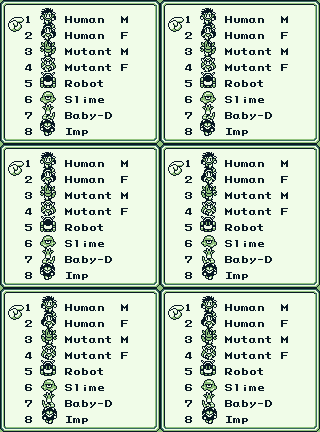 Customizing your
battle party
Mutants (or Espers) can learn spells and abilities that change as they gain experience, giving them unpredictable but powerful growth. Robots, on the other hand, gain stats based on the equipment you give them. Their weapons, shields, and items are restored to full durability whenever you stay at an Inn. Humans improve their stats by using specific items like Strength and Agility potions. Monsters evolve by eating the meat dropped by other monsters.
Learn more about characters/races in the Characters page.
My Opinion
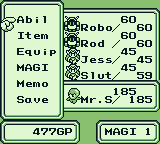 A character temporarily in your party (the fifth character)
This is my favorite of the three Final Fantasy Legend games! It's so much fun, and the music is great too. The story is a little corny at times, but it's interesting enough to keep you engaged. Like in Final Fantasy Legend 1, you get to choose your battle party at the very beginning, which is always a fun way to start. A nice improvement in this sequel is that certain characters will join your party for parts of the story, adding more variety and personality to your adventure.
What keeps me coming back to this game is how easy it is to get into. It's challenging enough to stay engaging without ever feeling frustrating. Final Fantasy Legend 1 is too short and simple, while Final Fantasy Legend 3 tries a bit too hard to be a deep, traditional RPG, which can make it feel tedious at times. Final Fantasy Legend 2 hits the perfect balance between the two. It's just the right mix of simplicity and depth, and it captures that classic Game Boy RPG charm perfectly.
If you enjoy old-school handheld RPGs, this one is absolutely worth playing. I highly recommend it!